Kicking Away the Ladder: Development Strategy in Historical Perspective
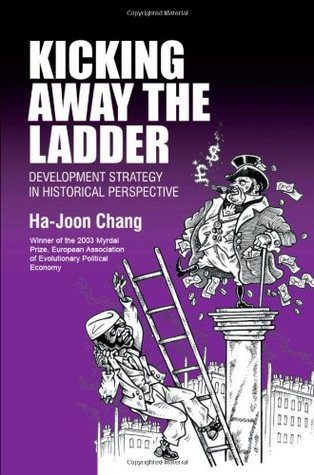
Chang’s essential contribution to development economics makes a single powerful argument: the policies that rich countries now prescribe to developing nations — free trade, minimal state intervention, deregulated financial markets — are precisely the policies that those same rich countries refused to follow during their own periods of industrialisation. Britain, the United States, Germany, France, and Japan all used industrial policy, tariff protection, and infant industry promotion to develop their productive capacities. Having climbed the ladder, they then kicked it away.
The book is meticulously researched and historically specific, moving through case studies of how today’s advanced economies actually developed rather than how they claim to have developed. Chang is a careful scholar and his critique of the “Washington Consensus” is all the more effective for being grounded in evidence rather than ideology.
Compact, rigorous, and essential for anyone interested in trade, industrial policy, or the political economy of development. Pairs naturally with Rodrik’s One Economics, Many Recipes and Rodney’s How Europe Underdeveloped Africa.